


Phone Clean Tools
4.3384.00 Reviews
App Specs
- Version
- 1.2.0
- Updated On
- License
- Free
- Downloads
- 1,000,000+
- Developer
- Diamond Queen Cleaning L.L.C.
- Categories
- Productivity
- Platform
- Android
Screenshots
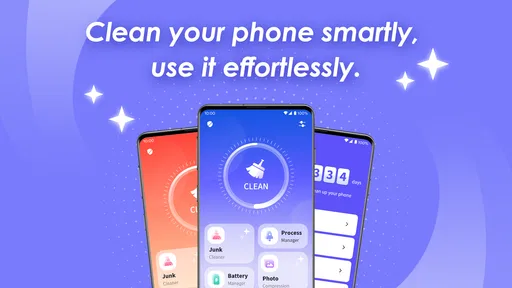
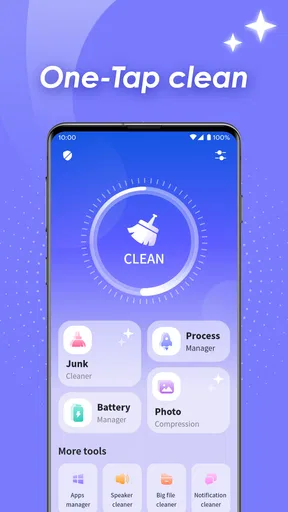
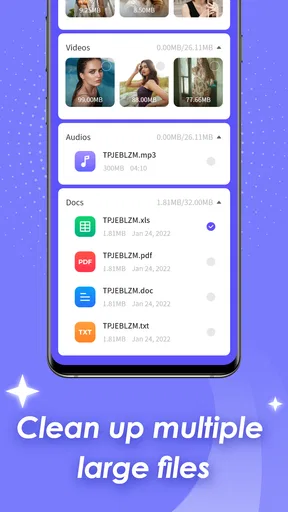
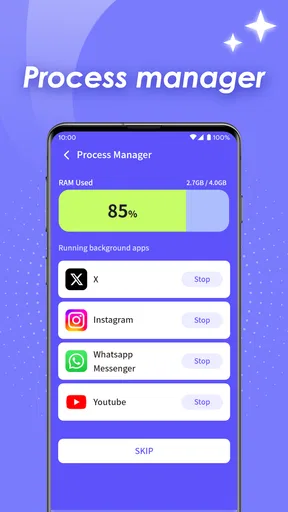
 Analysis by AppCompare
When my Android phone starts feeling crowded, I usually do not need another complicated maintenance suite. I need a clear way to look at what is taking space, decide what can go, and finish without second-guessing every tap. That is the role Phone Clean Tools tries to fill. It is a free productivity app from Diamond Queen Cleaning L.L.C., focused specifically on Android phone cleaning rather than trying to become an all-purpose organizer.
I approached it as I would with a phone that had accumulated screenshots, old downloads, duplicate-looking files, and application leftovers. The important thing is that a cleaning app is not useful merely because it displays a large amount of storage. It has to help me turn that information into a safe decision. My experience with Phone Clean Tools is generally positive, but its value depends on how much control and detail you expect from a cleanup tool.
From a crowded phone to a more manageable cleanup
The app sits in the productivity category, which makes sense in a practical way: its purpose is not entertainment, communication, or photo editing, but helping me maintain the device I use for everyday work. It is free to use, carries an Everyone age rating, and has reached over a million installs. Its average rating is 4.4 from around twelve thousand ratings, with hundreds of written reviews, so it has clearly attracted a sizeable audience beyond occasional experimentation.
Phone Clean Tools runs on Android 7.0 or later. I appreciate that broad compatibility because cleaning tools are often most useful on older phones, where storage pressure and sluggishness are more noticeable. The current version is 1.1.3, and the app was released on January 29, 2026. Those details matter less than the actual workflow, but they help place the app: this is a focused, relatively direct utility rather than a long-established system-management platform.
My starting condition was simple. I wanted to free space without deleting personal photos, current documents, or anything I might need later. That immediately creates a useful test for this kind of app. A good cleaner should help separate obvious clutter from valuable content. It should also make me pause before destructive actions instead of treating every large file as disposable.
Beginning with inspection instead of immediate deletion
The first useful habit is to treat the initial scan as an inventory, not a command to erase. When a phone feels full, the instinct is often to press the most prominent cleanup button. I would resist that. The better workflow is to inspect the categories and identify which type of material is actually causing the problem.
For example, a phone may appear slow because storage is nearly exhausted, while the real cause is a large collection of videos or downloads. In another case, the storage issue may come from applications that are still needed but have grown through offline content. A cleaning tool can point me toward the problem, but it cannot make the judgment about whether an item has personal value.
Worth Reading Before You Choose

EA SPORTS FC Mobile 26 Is a Bigger Football Game, but It Takes Time

Flipboard Shows What News Apps Must Do Beyond the Feed

Switching to Android Auto Means Rethinking Your Driving Routine

Google Calendar Makes a Crowded Week Easier to Manage

Ludo King Makes the Most of the Minutes Between Plans

Baby Panda World Brings Quick Play to Modern Phones, but Its Game Library Feels Busy
Phone Clean Tools is most approachable when I use it as a decision aid. I begin by checking the scan results, then I look for familiar names, recent files, and anything connected to an active project. This is especially important with screenshots. A screenshot from last month may be clutter, but a screenshot from a current booking, receipt, address, or work conversation may still be useful.
The safest workflow is scan, inspect, select, and only then clean. That four-part rhythm sounds obvious, but it is the difference between a useful maintenance session and a frustrating recovery exercise. I would not hand the final decision entirely to any cleaner, including this one.
Turning scan results into a practical plan
Once I know where the space is going, I divide the work into low-risk and high-risk actions. Low-risk material is usually temporary clutter that I recognize immediately. High-risk material includes personal media, documents, downloads, and anything whose name or location is unclear. Phone Clean Tools is more valuable when it helps me make that distinction rather than encouraging a single indiscriminate sweep.
A realistic example is a commuter who uses an Android phone for navigation, messaging, photos, and occasional work. After several weeks, the device may contain map-related downloads, images shared in group chats, screenshots of tickets, and files saved for a trip that has already ended. I would use the app first to locate the buildup, then open the relevant file areas through the phone’s normal file or gallery tools before deleting anything important.
That handoff is one of the most important parts of the experience. The cleaner can organize the problem, but the phone’s own file and media apps remain the better place to confirm context. If Phone Clean Tools identifies a group of items that looks unnecessary, I still want to know whether those items are backed up, whether they belong to a current conversation, and whether another application depends on them.
This is also where I would avoid a common mistake: assuming that freeing storage automatically makes every phone faster. Removing unnecessary files can make a device easier to use, particularly when storage is tight, but it is not a universal cure for battery drain, weak signal, an aging battery, or an application with a software bug. The app addresses the storage side of maintenance, not every possible performance problem.
Managing the handoff from the cleaner to me
The app’s job ends at the point where I must approve removal. That handoff should feel deliberate. I want readable labels, enough context to recognize what is being considered, and a chance to exclude items. If I cannot tell what a file is, I treat that uncertainty as a reason to leave it alone.
My preferred routine is to clean in small batches. I might begin with clearly obsolete downloads, review the result, and then move to another category. This takes longer than pressing one broad action, but it makes mistakes easier to identify and undo if the device offers a recovery route. It also prevents a familiar problem with cleaning utilities: clearing so much at once that I no longer know which action changed the phone.
There is a second handoff that deserves attention. If the phone is shared with a family member, or if it contains work and personal material together, the person running the cleanup may not be the only person affected by it. I would ask before removing shared media, exported documents, or files stored for someone else. A cleaner can see storage, but it does not understand ownership or social context.
For that reason, I see Phone Clean Tools as a guided housekeeping tool rather than an automatic caretaker. It can make the first pass less tiring, but I remain responsible for the final selection. That is not a defect unique to this app; it is a basic limitation of file cleanup on a personal device.
What the result feels like after a careful pass
After a sensible cleanup, the immediate result I look for is not a dramatic transformation. It is a phone with fewer distractions, more available room, and a clearer understanding of what remains. If the main problem was accumulated clutter, the app can make that problem feel manageable instead of mysterious.
The benefit is particularly noticeable for people who rarely open a file manager. A dedicated cleaning interface gives them a starting point and a reason to review forgotten material. It can also turn maintenance into a repeatable habit: inspect the phone before a trip, after a large media-heavy event, or when a download fails because there is not enough room.
One non-obvious advantage of this workflow is that it changes how I use storage afterward. Once I see which kinds of files accumulate, I can adjust my habits. I may stop saving every shared image, remove finished downloads sooner, or move important videos somewhere else before they become a problem. The app is therefore most useful when it helps me learn the phone’s storage pattern, not just empty it once.
Another practical tip is to clean before installing a large application or recording a long trip’s worth of video, rather than waiting for an urgent warning. A calm review gives me time to check personal files and make backups. Under pressure, I am more likely to delete something simply because its name looks unfamiliar.
Where the workflow breaks down
Phone Clean Tools is not the right choice for everyone. If I want detailed control over folders, file names, cloud synchronization, or a complete storage audit, I would prefer the phone manufacturer’s file manager or a dedicated file-management application. Those tools are usually better suited to someone who already understands Android storage and wants precise control rather than a simplified cleaning experience.
I would also skip it if my main complaint is battery life or background activity. A storage cleaner may help indirectly when the device is overloaded, but it should not be treated as a battery diagnostic tool. Likewise, if the phone’s storage is occupied mostly by applications I actively need, deleting random files will not solve the underlying limitation. In that situation, reviewing large applications and their offline content manually is the more honest approach.
There is friction in any cleanup app that groups files by broad purpose. A category can contain both disposable material and something valuable. Similar-looking images may not be true duplicates, and an old-looking document may still be needed for taxes, travel, school, or work. I would never assume that a visual grouping is proof that every item can be removed.
Privacy-conscious users may also prefer to keep the process as close to Android’s built-in tools as possible. I understand that preference. A focused third-party cleaner adds convenience, but convenience should not replace reading what the app is asking me to review or allowing me to remove. I would recommend using it only when its interface makes the cleanup clearer than the alternatives already on the phone.
Who gets the most value from it
I think Phone Clean Tools is best for Android users who know their phone is cluttered but do not want to investigate every folder manually. It suits someone who wants a simple starting point, especially on an older compatible device or a phone used heavily for photos, downloads, messaging, and offline media.
It is also useful for a family member who needs a guided cleanup session. I could sit with that person, review the categories together, and explain why some files are safe to remove while others should stay. In that setting, the app is less about automation and more about making an unfamiliar maintenance task approachable.
On the other hand, advanced Android users may find the focused approach limiting. If I already know exactly which folders are large and how to manage them, the extra scanning layer may not save much time. Someone who needs backups, file transfers, cloud organization, or application-level troubleshooting should look for a broader toolset instead of expecting this app to cover those jobs.
My recommendation after following the full workflow
Phone Clean Tools succeeds when I use it as the first stage of a careful storage review. It takes the starting condition—a phone that feels crowded—and gives me a more structured path toward an outcome I can understand. The strongest part is its focused purpose: I am not navigating a huge collection of unrelated features when all I want is help with phone cleanup.
The trade-off is that the app cannot know the personal meaning of my files. The final quality of the result depends on my inspection and judgment. I would not use it as a one-tap eraser, and I would not expect it to repair every kind of phone slowdown. I would use it before travel, after a period of heavy media sharing, or whenever storage warnings begin interrupting normal tasks.
For a free Android cleaning utility with an Everyone rating and broad support beginning with Android 7.0, it is an accessible option. Its popularity and 4.4 average suggest that many users find the approach useful, but those figures do not remove the need for care. My recommendation is straightforward: try it if you want a guided way to discover clutter, keep the phone’s own tools nearby for verification, and delete in small, recognizable batches.
In my view, Phone Clean Tools is worth using when clarity matters more than total control. It can turn an intimidating storage problem into a sequence of manageable choices. If you want a full file-management system, deeper diagnostics, or completely manual control, another option will serve you better. For everyday Android housekeeping, though, it offers a practical starting point—as long as I remain the person making the final decision.
Pros
- Quickly identifies junk files and cache taking up storage space.
- Simple interface makes cleanup tools easy to find and use.
- Can help free space without requiring advanced technical knowledge.
- Useful storage overview shows which file types consume the most room.
- Some cleanup features may improve phone responsiveness after removal.
Cons
- Results may include files you prefer to keep
- so review selections carefully.
- Automatic cleaning can be limited by Android or iOS system restrictions.
- Frequent notifications or upgrade prompts may become distracting.
- Deep cleaning features may require payment or a premium subscription.
- Scanning and cleanup can use noticeable battery on older devices.
FAQs for Phone Clean Tools
What is Phone Clean Tools and what does it do?
Phone Clean Tools is designed to help Android users identify and remove unnecessary files that may consume valuable storage space. Depending on the version installed, it may scan items such as cached data, temporary files, leftover installation packages, duplicate content, and rarely used applications. It can also provide basic storage information, helping you decide what to delete rather than removing important personal files automatically.
Is Phone Clean Tools safe to use on my device?
The app can be useful when handled carefully, but users should review scan results before confirming any cleanup. Cleaning applications often request access to storage, installed apps, or other device information so they can analyze files. Download Phone Clean Tools from a trusted source, check its permissions and privacy policy, and avoid granting access that seems unrelated to its cleaning features. Always keep backups of important photos, documents, and messages.
Can Phone Clean Tools improve phone performance?
Phone Clean Tools may help a phone feel more responsive when storage is nearly full, particularly by removing temporary data and other harmless leftovers. However, it is not a guaranteed solution for every performance problem. Slowdowns can also be caused by an aging battery, outdated software, excessive background activity, or hardware limitations. The app should be viewed as a storage-management tool rather than a complete repair or optimization solution.
Will using Phone Clean Tools delete my photos, videos, or important files?
The answer depends on the cleanup options you select. Some versions may identify large files, duplicate media, screenshots, or downloads, but these items are not necessarily unwanted. Before tapping a delete button, inspect the selected list carefully and deselect anything you want to keep. It is especially important to review media folders and documents, because a cleaning tool may not understand the personal value of a file.
Does Phone Clean Tools require a subscription or an internet connection?
Availability of free features, advertisements, premium tools, and subscriptions may vary according to the version and platform offered. Basic scanning can often work locally on the phone, while advertisements, updates, cloud-related features, or extra utilities may require an internet connection. Before downloading, review the store listing for pricing and in-app purchase information, and check the subscription terms so you understand any recurring charges.


